

When a patient needs a biologic drug for rheumatoid arthritis, cancer, or diabetes, they often face a sticker shock: $50,000 to $100,000 a year. That’s not a typo. These life-saving medicines are made from living cells, not chemicals, and they’re expensive to produce. But there’s a cheaper alternative: biosimilars. Unlike generic pills that are exact copies of brand-name drugs, biosimilars are highly similar versions of complex biologic medicines. They’re not identical - they can’t be. But they work the same way. And starting in late 2025, the FDA changed how it reviews them to get these drugs to patients faster and cheaper.
What Makes Biosimilars Different from Generics?
Think of a generic drug like a photocopy. You take a pill, scan it, and print an exact replica. It has the same active ingredient, same dose, same effect. That’s why generics cost pennies. Biosimilars? They’re more like a hand-painted replica of a Van Gogh. You can get close - really close - but you can’t copy the brushstrokes exactly. Biologics are made from living cells, grown in vats, purified, and stabilized. Tiny changes in temperature, pH, or cell line during manufacturing can alter the final product. That’s why the FDA doesn’t call them "copies." They call them "biosimilar."
Before October 2025, the FDA required sponsors to run full clinical trials comparing the biosimilar directly to the original biologic for efficacy - often taking 2-3 years and costing $200 million or more. That kept most small companies out. Only big pharma could afford it. Now, the rules have shifted.
The 2025 FDA Guidance: A Game Changer
On October 29, 2025, the FDA dropped a major update to its biosimilar review process. The new draft guidance says: if you can prove analytical similarity, you might not need a full efficacy trial at all.
Here’s what’s required now:
- Analytical studies: Use advanced tools like mass spectrometry and chromatography to compare over 200 structural and functional features between the biosimilar and the reference product. This includes protein folding, sugar attachments, and purity levels.
- Pharmacokinetic (PK) studies: Show that the body absorbs, processes, and clears the biosimilar at the same rate as the original.
- Immunogenicity data: Prove the biosimilar doesn’t trigger more or different immune reactions than the reference drug.
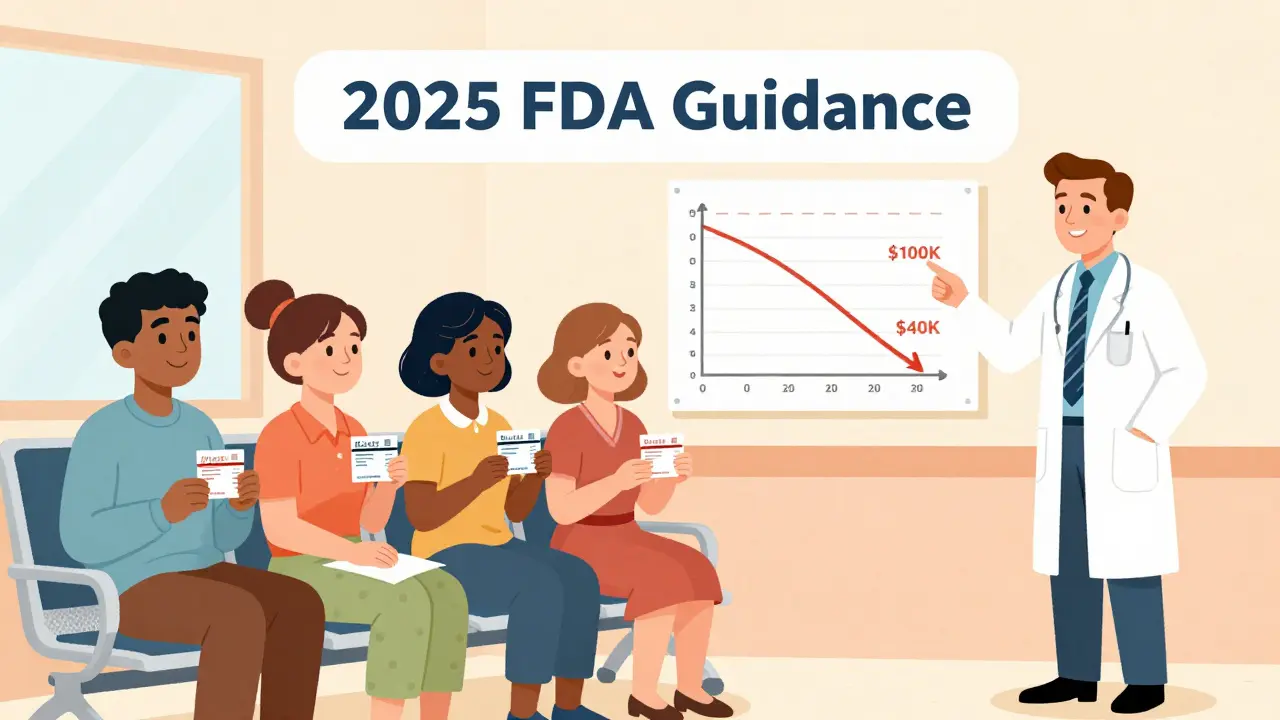
If those three boxes are checked - and the biologic is well understood (like adalimumab or trastuzumab) - the FDA may waive the costly comparative efficacy study. That’s a huge deal. It slashes development time from 8-10 years down to 5-7 years and cuts costs from $300 million to under $150 million.
This aligns the U.S. more closely with Europe, where the EMA has approved over 100 biosimilars since 2006. The U.S. had only 76 approved as of late 2025, and biosimilars captured just 23% of the market for available biologics - compared to 67% in Europe. The new guidance is meant to fix that.
Interchangeability: What It Means (and Why It’s Controversial)
Interchangeability is the holy grail. It means a pharmacist can swap a biosimilar for the brand-name drug without asking the doctor. In 34 states, that’s still not allowed - even if the FDA says it’s okay.
Before 2025, getting interchangeability status required a "switching study" - patients had to alternate between the reference drug and the biosimilar multiple times to prove no added risk. The FDA’s October 2025 guidance says: that’s outdated. Commissioner Marty Makary called interchangeability "a legislative term, not a scientific term." He argued that if a biosimilar is approved, it’s safe to switch.
In fact, in October 2025, the FDA granted interchangeability status to two denosumab biosimilars at once - the first time that happened for the same reference product. But here’s the tension: Congress still requires a separate application for interchangeability under the law. The FDA can’t just declare all biosimilars interchangeable without changing the statute. So while the agency is moving toward that position, legal and pharmacy systems haven’t caught up. That’s causing confusion. Some doctors still won’t prescribe biosimilars unless they’re labeled interchangeable. Pharmacists are stuck between state laws and federal guidance.
Who’s Making Biosimilars - and Who’s Not?
The biosimilar market is still dominated by big players: Sandoz, Pfizer, and Amgen account for nearly 40 approvals between them. But the new guidance is meant to open the door for smaller companies.
Here’s the problem: even with lower costs, the analytical tools needed are expensive. You need $10 million just to set up the lab. Only 12 of the 76 approved biosimilars came from companies with fewer than 100 employees. The FDA’s Biosimilars Community Resource Center got over 12,000 visitors in October 2025 - many from startups trying to navigate the process.
Companies like Viatris and Biocon are stepping up, but the learning curve is steep. It takes 12-18 months just to build the quality control systems before you even submit an application. And 42% of biosimilar applications still get rejected with a "complete response letter" - meaning the FDA wants more data. The new guidance aims to reduce that number.
Real-World Results: Patients and Hospitals Are Seeing Savings
Behind the regulations, real people are using these drugs. A September 2025 survey by the Arthritis Foundation found 78% of patients on biosimilars were satisfied with their effectiveness. But 41% were scared at first - worried they’d get worse or have side effects. Once they talked to their doctor, 68% of those fears disappeared.
On Reddit, a thread about switching to a biosimilar for rheumatoid arthritis had 87 comments. Sixty-three percent reported no difference in symptoms. Twenty-two percent noticed minor issues - mostly injection site redness or itching. No major safety events were reported.
Hospitals are saving big. Mayo Clinic reported a 37% drop in biologic drug costs after switching to biosimilars for cancer treatments. That’s $18 million saved in one year. Other health systems are following. By September 2025, 89% of U.S. hospitals had biosimilars in their formularies.
Challenges Still Standing in the Way
Even with the FDA’s progress, hurdles remain.
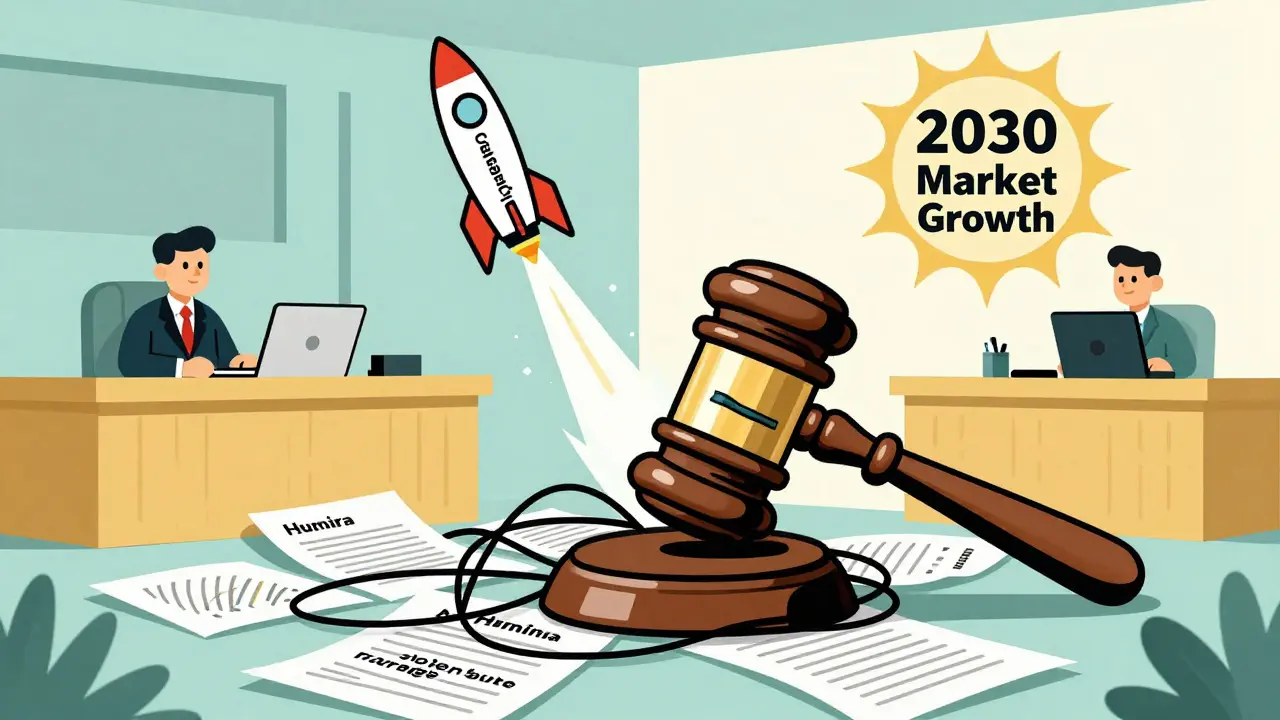
Patent thickets. Big drugmakers file dozens of patents around their biologics - not just on the drug itself, but on delivery devices, manufacturing methods, even storage conditions. The FTC found that 68% of approved biosimilars have been delayed by lawsuits. Some cases drag on for years.
Complex molecules. Biosimilars for monoclonal antibodies (like Humira or Herceptin) are easier to replicate. But antibody-drug conjugates - where a biologic is attached to a chemotherapy agent - are trickier. The relationship between structure and effect isn’t fully understood. The FDA’s guidance warns that for these, clinical studies may still be needed.
Patient awareness. Only 32% of patients know what a biosimilar is, according to the National Biosimilars Survey. Many still think "biosimilar" means "inferior." Education is lagging.
What’s Next? The Road to 2030
The U.S. biosimilar market was worth $18.7 billion in 2024. By 2029, it’s projected to hit $62.3 billion. The FDA’s new guidance could push that even higher. McKinsey forecasts biosimilars could capture 40-50% of the market for major biologics by 2030 - up from 23% now. That could save the system $150 billion a year.
The draft guidance is open for public comment until January 27, 2026. Final rules are expected by June 2026. If implemented as planned, annual biosimilar approvals could jump from 8-10 to 15-20 per year.
But the biggest question isn’t scientific. It’s legal. Can the FDA declare all biosimilars interchangeable without Congress changing the law? Until that’s resolved, doctors, pharmacists, and patients will keep facing mixed messages. The science is ready. The systems aren’t.
Bottom Line: Faster, Cheaper, Safer - But Not Simple
The FDA’s 2025 update is the biggest step forward for biosimilars since the law passed in 2010. It’s smarter, faster, and more science-based. It lowers barriers for new companies. It gets life-saving drugs to patients sooner. It saves billions.
But it’s not a magic bullet. Patent fights, state laws, and patient fears still block access. And not every biologic is easy to copy. Still, the direction is clear: biosimilars are no longer a niche. They’re the future of affordable biologics. The FDA just gave them the green light - now everyone else has to catch up.


Write a comment