
When someone says they’re allergic to penicillin, a common antibiotic used to treat bacterial infections like strep throat, pneumonia, and skin infections. Also known as beta-lactam allergy, it’s one of the most frequently reported drug allergies in the U.S. But here’s the catch: over 90% of people who believe they’re allergic to penicillin aren’t. They might have had a rash as a kid, heard a family story, or got labeled during a hospital visit decades ago. That label sticks—even if it’s wrong. And it’s costing you more than just peace of mind. Avoiding penicillin means doctors reach for stronger, pricier, or riskier antibiotics like vancomycin or clindamycin. Those drugs can cause C. diff infections, yeast overgrowth, or even kidney stress. Penicillin allergy testing isn’t just about safety—it’s about getting you the right treatment, fast.
Testing for penicillin allergy, a potential immune reaction to penicillin or related antibiotics that can range from mild rash to life-threatening anaphylaxis is simple, safe, and often done in a doctor’s office. It usually starts with a skin test: tiny amounts of penicillin and its breakdown products are placed under the skin. If there’s no reaction after 15–20 minutes, you’re likely not allergic. If the skin test is negative, some patients get an oral challenge—taking a small dose of penicillin under supervision. Studies from the Mayo Clinic and the American Academy of Allergy show this process is over 95% accurate. And if you test negative? You can cross off penicillin from your allergy list forever. That’s huge. It means fewer side effects, lower costs, and better outcomes if you ever need surgery, a serious infection, or antibiotics during pregnancy.
It’s not just about penicillin. That label can affect your entire antibiotic choices. If you’ve been told you’re allergic to penicillin, you might also avoid cephalosporins, a class of antibiotics often used for urinary tract infections and sinusitis, even though cross-reactivity is rare—under 2% for most people. And if you’ve been told you’re allergic to sulfonamide, a different class of drugs often confused with penicillin, you might be avoiding sulfa-based diuretics or diabetes meds unnecessarily. These are separate allergies. Confusing them can lead to misdiagnosis, wrong prescriptions, and missed treatment windows. That’s why getting tested matters. It’s not a one-time thing—it’s a lifelong health upgrade.
Many people avoid testing because they’re scared of a reaction. But the truth is, serious reactions during testing are extremely rare when done by trained professionals. Most clinics use a step-by-step approach to keep you safe. If you’ve had a mild rash years ago, or your allergy was diagnosed by a nurse during a quick ER visit, you’re a perfect candidate. You don’t need a specialist referral—many primary care doctors can refer you to an allergist who does these tests regularly. And if you’re on insurance, it’s often covered. No more guessing. No more avoiding the safest, most effective antibiotics. Just clear answers.
Below, you’ll find real stories and science-backed guides on how drug allergies work, what to do if you’re mislabeled, and how to talk to your doctor about testing. Whether you’ve been avoiding penicillin for years or just got a new diagnosis, these posts will help you cut through the noise and make smarter choices for your health.
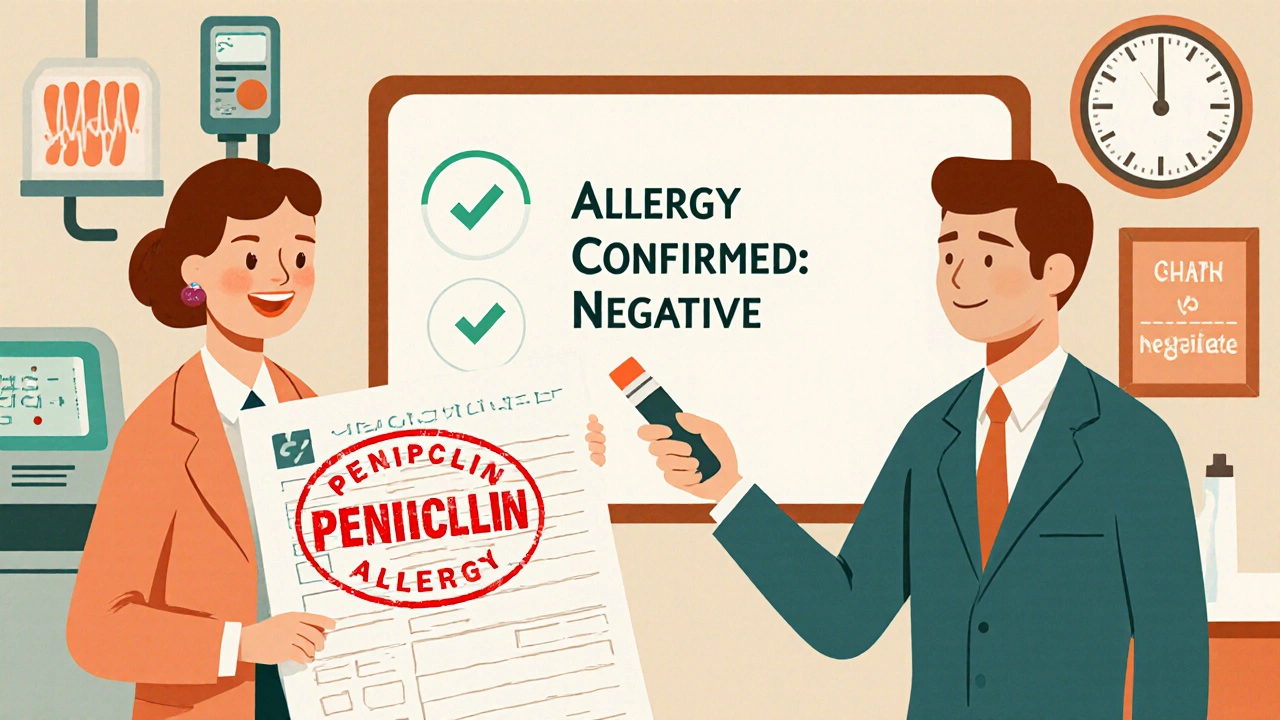
Penicillin allergy labels are often wrong and lead to riskier, costlier antibiotics. Accurate testing can safely remove these labels, reduce infections like C. diff, and improve treatment outcomes for millions.