
When someone says they have a penicillin allergy, a reported immune reaction to penicillin antibiotics that often leads to avoided treatments and less effective care. Also known as penicillin hypersensitivity, it’s one of the most common drug labels in medical records—but also one of the most frequently wrong. Studies show over 90% of people who believe they’re allergic to penicillin can actually take it safely. Many got the label after a rash as a kid, a family story, or a vague reaction decades ago. Today, that label might be costing you more than just peace of mind—it could be limiting your treatment options, pushing doctors toward costlier or riskier antibiotics, or even delaying care when you need it most.
That’s where penicillin allergy de-labeling, the process of safely removing an incorrect penicillin allergy label from your medical record comes in. It’s not about ignoring risk—it’s about replacing guesswork with facts. The process usually starts with a detailed history, then moves to skin testing or an oral challenge under medical supervision. If tests come back negative, you’re no longer labeled allergic. This opens the door to safer, cheaper, and more effective treatments. For example, instead of being stuck with vancomycin or clindamycin for an infection, you could get amoxicillin—more targeted, less disruptive to your gut, and far less likely to cause resistant infections.
Related to this is the broader issue of drug allergy testing, the clinical process used to confirm or rule out true allergic reactions to medications. Just like with penicillin, many people carry labels for sulfa drugs, NSAIDs, or other antibiotics they never actually reacted to. The sulfonamide allergy guide on this site shows how similar confusion happens with sulfa-based meds. And just like penicillin de-labeling, testing can free you from unnecessary restrictions. It’s not a one-size-fits-all fix—but it’s a simple, low-risk step that can change your entire treatment path.
Don’t let an old label control your health. If you’ve been told you’re allergic to penicillin but never had a severe reaction—like swelling, trouble breathing, or anaphylaxis—it’s worth asking your doctor about de-labeling. Most primary care providers, allergists, or even pharmacists can start the conversation. You don’t need to be in crisis to make this change. And if you’ve avoided penicillin-based drugs for years, you’re not alone. But you might be missing out on better, simpler care. The posts below show real cases, patient stories, and clinical insights into how mislabeled allergies affect treatment, why testing works, and how to talk to your doctor about it. You’ll also find related guides on antibiotic side effects, cross-reactivity, and how to manage drug reactions safely. This isn’t just about penicillin—it’s about taking control of your medication history.
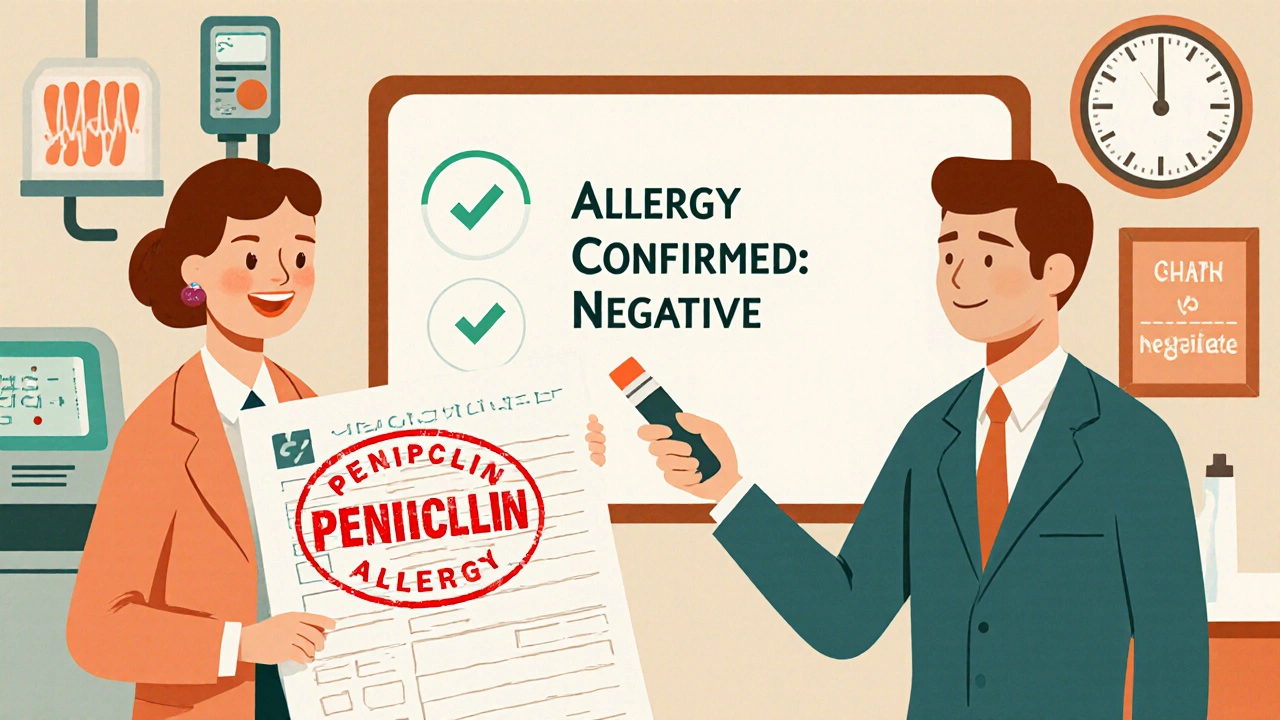
Penicillin allergy labels are often wrong and lead to riskier, costlier antibiotics. Accurate testing can safely remove these labels, reduce infections like C. diff, and improve treatment outcomes for millions.