
When you get older, your body doesn’t just slow down—it starts losing muscle. This isn’t just about getting weaker; it’s called sarcopenia, the age-related loss of muscle mass and strength. Also known as muscle wasting, it affects nearly half of people over 80 and increases risk of falls, fractures, and loss of independence. The good news? You’re not powerless against it.
What’s behind this decline? It’s not just time. Your body produces less of the hormones that build muscle, like testosterone and growth hormone. Nerves that signal your muscles to move also start to die off. And if you’re not moving enough—or not eating enough protein—your muscles have no reason to stay strong. This isn’t just about lifting weights. It’s about daily movement: walking, standing up from a chair, carrying groceries. These actions keep your muscles engaged. Meanwhile, your protein needs don’t shrink with age—they actually go up. While a 25-year-old might need 0.8 grams of protein per kilogram of body weight, someone over 65 needs closer to 1.2 grams. That’s about 20–30 grams of protein per meal, spread across the day. Eggs, chicken, Greek yogurt, lentils, and whey protein all help. Skipping meals or eating mostly carbs and fats? That’s like taking away fuel from a car that’s already running low.
And it’s not just what you eat or do—it’s what you avoid. Long periods of sitting, bed rest after illness, or skipping strength training for months can speed up muscle loss. Even minor injuries or hospital stays can trigger rapid decline. That’s why staying active isn’t optional—it’s survival. You don’t need a gym. Bodyweight squats, resistance bands, and walking up stairs work. Studies show that even people in their 90s can gain strength with the right program. And when muscle stays strong, your bones stay protected, your balance improves, and your energy levels stay higher.
What you’ll find below are real, practical guides that connect muscle loss with age to the medications, supplements, and lifestyle choices that either help or hurt. You’ll see how drugs like statins can contribute to muscle breakdown, how protein intake affects recovery, and how simple changes in daily habits can make a measurable difference. These aren’t theories. They’re based on what people actually experience—and what works.
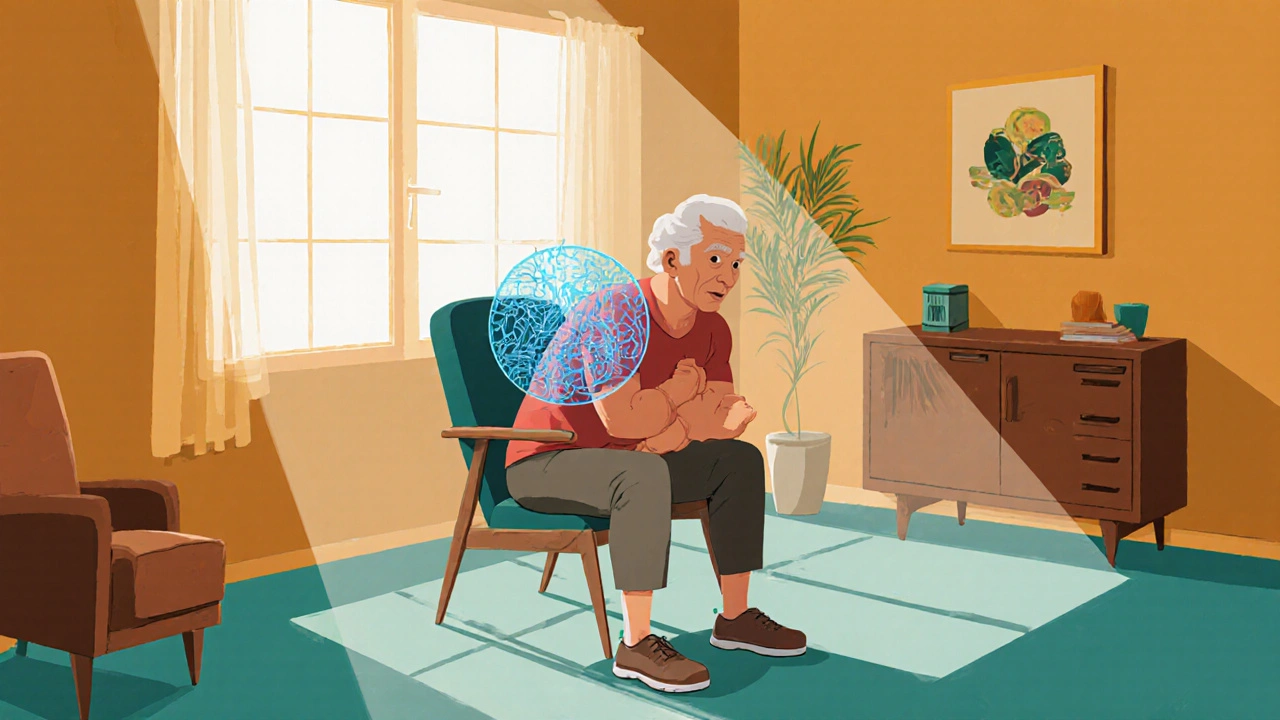
Sarcopenia is the progressive loss of muscle mass and strength with age, affecting up to half of people over 80. Strength training is the most effective way to prevent and reverse it, improving mobility, reducing fall risk, and preserving independence.