
When you take simvastatin, a cholesterol-lowering statin medication commonly prescribed to reduce heart attack and stroke risk, your body relies on specific enzymes to break it down safely. But if you eat grapefruit, a citrus fruit known for its tart flavor and high vitamin C content—or drink grapefruit juice—those enzymes get blocked. That means simvastatin builds up in your blood, turning a safe dose into a potential health emergency. This isn’t a minor warning. It’s one of the most dangerous food-drug interactions out there, and it’s happened to people who thought a small glass of juice was harmless.
Why does this happen? Grapefruit contains chemicals called furanocoumarins that shut down an enzyme called CYP3A4 in your gut. This enzyme is responsible for processing about half of all prescription drugs, including simvastatin, a statin that’s particularly sensitive to this effect. Other statins like atorvastatin and lovastatin have similar risks, but simvastatin is the worst offender. Even one grapefruit or a single 8-ounce glass of juice can cause this effect for up to 72 hours. That means it’s not about timing—it’s about avoidance. If you’re on simvastatin, you can’t just space out your juice and pill. There’s no safe window.
What happens when simvastatin builds up? Your muscles start breaking down. This condition, called rhabdomyolysis, can lead to kidney failure, severe pain, and even death. You might notice unexplained muscle soreness, weakness, or dark urine—signs you should never ignore. The risk goes up if you’re over 65, have kidney problems, or take other medications that also affect CYP3A4, like certain antibiotics or antifungals. And no, other citrus fruits like oranges or lemons won’t do this. Only grapefruit and its close relatives, like Seville oranges and pomelos, trigger the reaction.
So what do you do? If you’re on simvastatin, stop grapefruit completely. Talk to your doctor about switching to a different statin that doesn’t interact with grapefruit—like pravastatin or rosuvastatin. They work just as well for lowering cholesterol without the risk. And don’t assume that "a little bit" is okay. One study found that even a small amount of grapefruit juice raised simvastatin levels by over 300%. That’s not a risk worth taking.
It’s not just about avoiding fruit. Many over-the-counter supplements, herbal products, and even some juices labeled as "citrus blend" can contain grapefruit. Always check labels. And if you’ve been eating grapefruit while on simvastatin, don’t panic—but do call your doctor. They can check your liver and muscle enzymes and adjust your treatment if needed.
Below, you’ll find real patient stories, expert advice, and practical guides on managing your meds safely. From understanding how grapefruit affects other drugs to learning how to spot early signs of muscle damage, these posts are here to help you stay healthy without guessing.
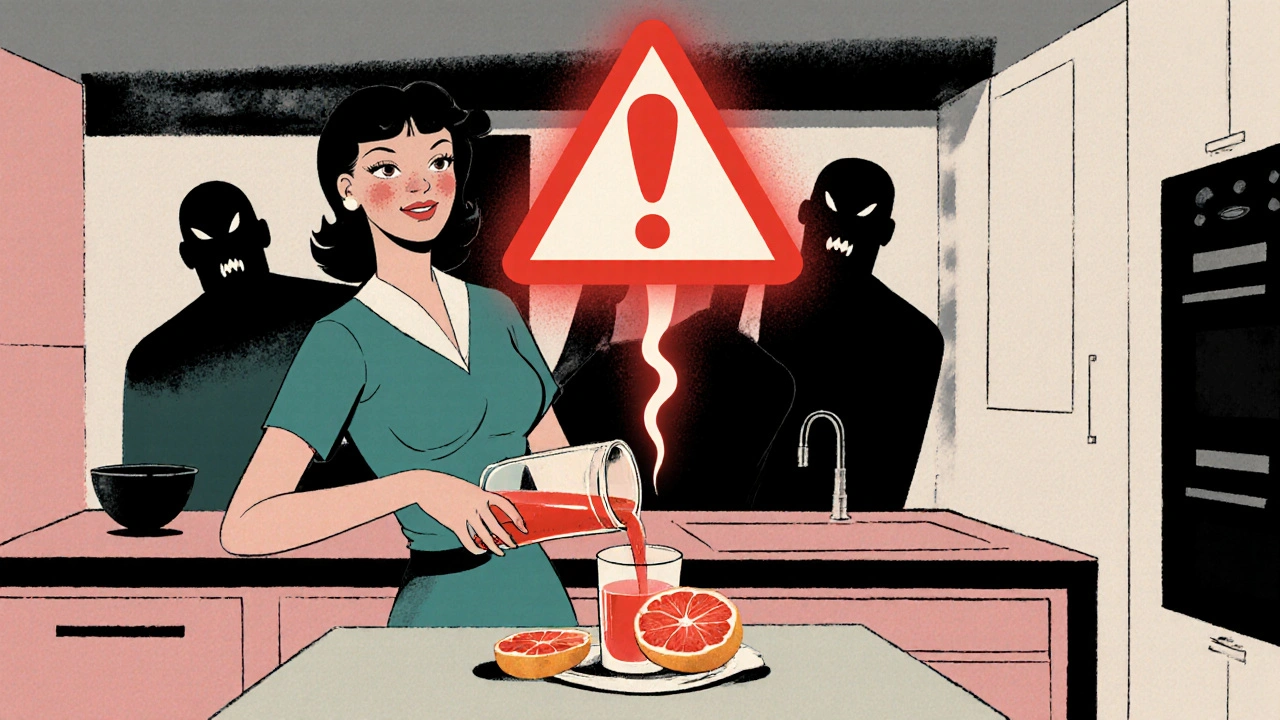
Simvastatin can be life-saving-but mixing it with certain drugs or grapefruit juice can cause deadly muscle breakdown. Learn which combinations to avoid, why the 80 mg dose is dangerous, and what safer alternatives exist.