
When you get older, your body doesn’t just slow down—it starts losing muscle. This isn’t just about feeling weaker at the gym. It’s age-related muscle loss, a natural decline in muscle mass and strength that begins as early as your 30s and accelerates after 60. Also known as sarcopenia, it’s one of the biggest reasons older adults lose independence, fall more often, and struggle with daily tasks like climbing stairs or carrying groceries. This isn’t inevitable. It’s a process you can slow down, and in many cases, reverse—with the right moves.
What’s happening inside your body? Your muscles need signals—movement, protein, and hormones—to stay strong. As you age, those signals fade. You produce less growth hormone and testosterone. Your nerves don’t fire as efficiently to your muscles. And if you’re not eating enough protein or moving regularly, your body starts breaking down muscle tissue just to survive. sarcopenia, a clinical term for severe age-related muscle loss isn’t just about size—it’s about function. A 70-year-old with sarcopenia might have the same muscle weight as a 30-year-old, but half the strength. That’s because the quality of the muscle changes too.
And here’s the thing: most people don’t realize how fast it happens. Studies show you can lose 3% to 5% of your muscle mass per decade after 30. By 80, that’s up to half your muscle gone. But it’s not just about lifting weights. protein intake for seniors, the amount and timing of protein you eat each day matters just as much. Older adults need more protein per meal than younger people to trigger muscle growth—and most aren’t getting it. Eating 25 to 30 grams of high-quality protein at breakfast, lunch, and dinner makes a real difference. So does moving every day—even light walking, standing up from a chair without using your hands, or doing bodyweight squats.
It’s not just about diet and exercise. Medications, chronic illness, and even too much sitting can speed up muscle loss. That’s why some of the articles below cover how drugs like statins and diuretics can affect muscle health, why staying active helps even when you’re on long-term meds, and how side effects from common prescriptions can make muscle loss worse. You’ll also find real talk about what actually works: resistance training that doesn’t require a gym, how to track your strength at home, and why skipping meals or eating too little sugar can backfire when you’re older.
Age-related muscle loss isn’t something you just have to accept. It’s a condition you can manage—with clear steps, smart choices, and the right information. Below, you’ll find practical guides on how to protect your muscles, avoid drugs that hurt them, and stay strong as you age—no fluff, no guesswork, just what works.
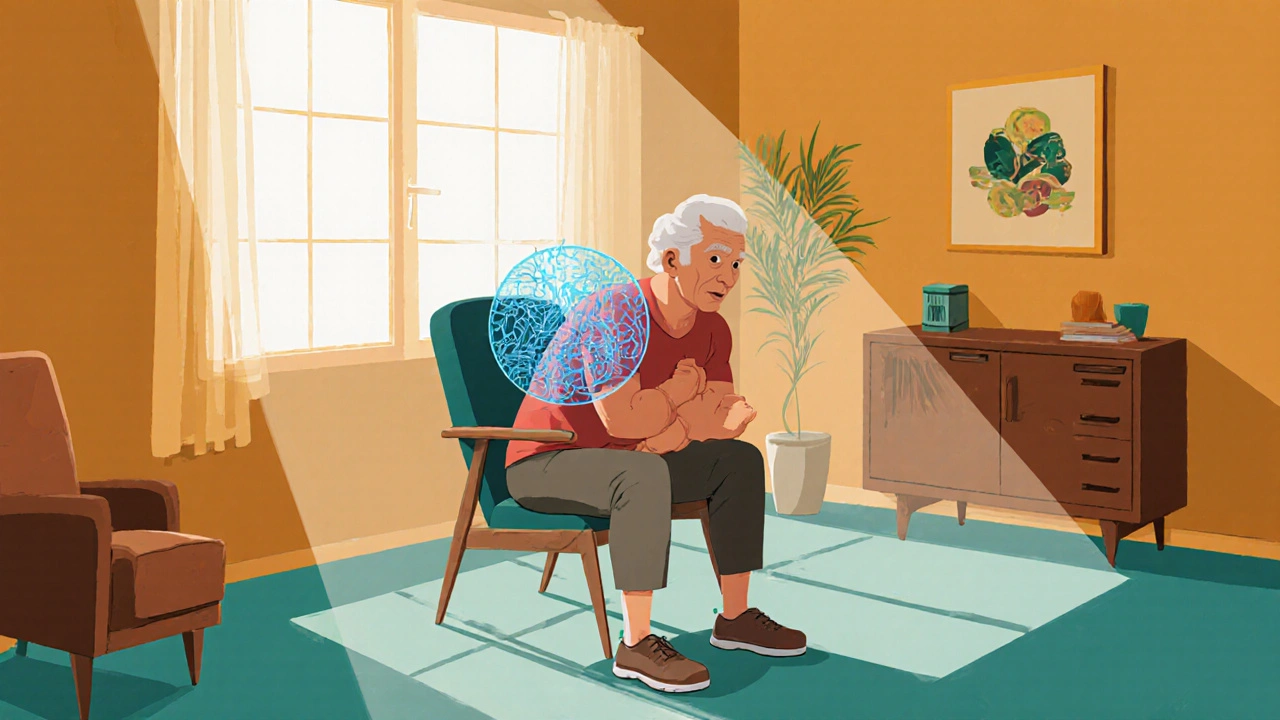
Sarcopenia is the progressive loss of muscle mass and strength with age, affecting up to half of people over 80. Strength training is the most effective way to prevent and reverse it, improving mobility, reducing fall risk, and preserving independence.